Elite HVAC Load Calculations
Stop guessing on equipment tonnage. We deliver ACCA-compliant Manual J, S, D, and N engineering reports that guarantee system performance and permit approval.



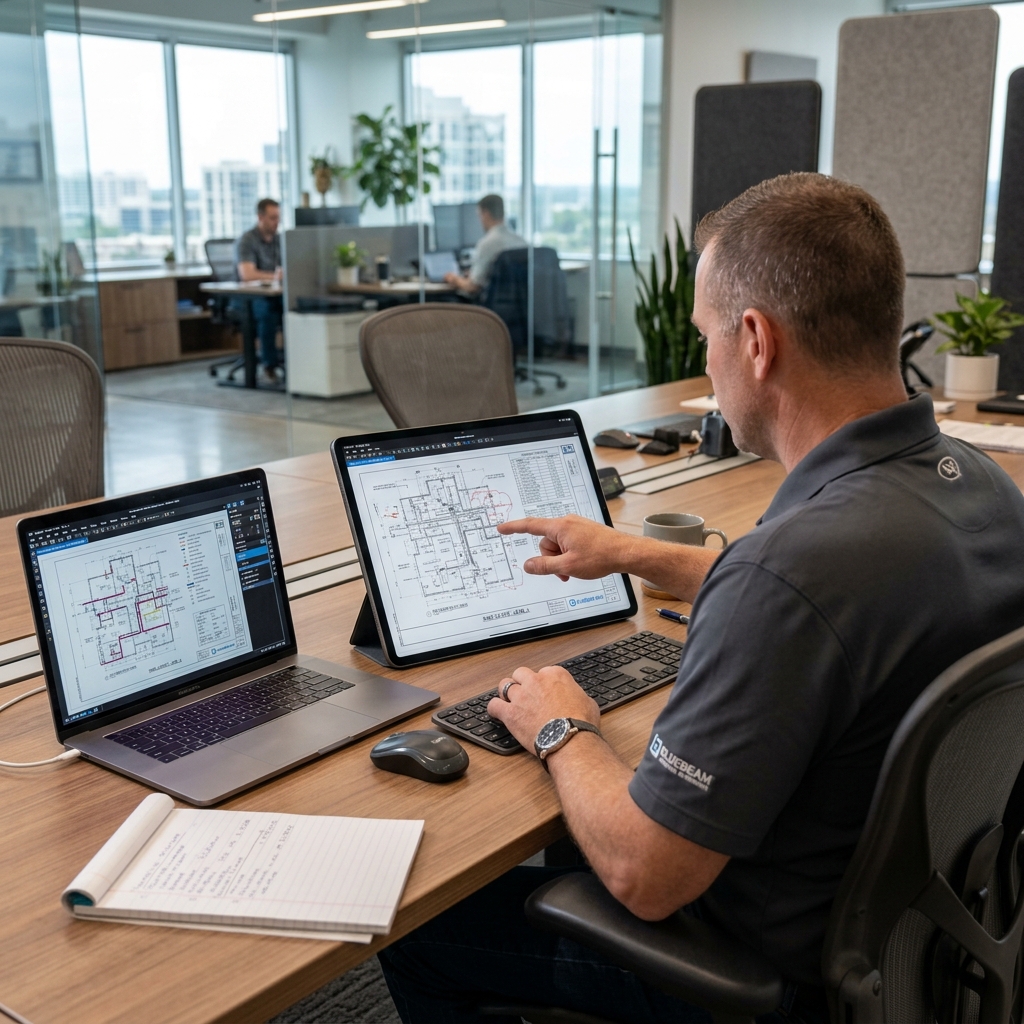
Is Your HVAC System Fighting the Building or Working With It?
Did you know that over 60% of modern HVAC systems in the US are oversized by at least half a ton? In the competitive world of mechanical construction, 'bigger is better' is a myth that leads to short-cycling, high humidity, and premature equipment death. At HVAC Estimating Services, we eliminate the guesswork. We provide HVAC load calculation services built on the forensic laws of thermodynamics.
Our engineering desk utilizes the elite ACCA protocol—Manual J for residential and Manual N for commercial. We don't just 'measure' square footage; we audit the building's lungs. By analyzing the thermal resistance of your walls, windows, and roof alongside internal heat-gain from people and lighting, we determine the *exact* BTU requirement for every room. Consequently, your residential builds achieve peak comfort with the lowest possible energy footprint.
From high-rise developments in California to custom mansions in Texas, our permit-ready engineering packets navigate the plan-review process with 100% professional authority. We bridge the gap between the digital takeoff and the final installation, ensuring your systems are balanced, quiet, and code-compliant.
Precision Load Engineering Architecture
We deploy a four-stage engineering sequence to ensure your mechanical systems are perfectly matched to the building's thermal envelope.
- Manual J/N Load Certification Certified room-by-room sensible and latent heat analysis for any building type.
- Manual D Balanced Duct Design Translating BTU needs into balanced, whisper-quiet air distribution networks.
- ASHRAE 62.1/2 Ventilation Analysis Mathematically calculating fresh air make-up to satisfy strict healthy-air building codes.
- Manual S Equipment Selection Matching manufacturing performance curves against your specific regional design temperatures.
Engineering Success: LEED School Project
In a recent LEED-certified school development, our forensic Manual N audit identified a 15% discrepancy in standard load-guesses due to high-performance window glazing. By right-sizing the units, we saved the district $24k in initial equipment costs.
The Thermodynamic Audit Cycle
Phase 1: Thermodynamic Audit
First, we analyze the architectural prints for window U-factors and wall R-values to establish the building's thermal resistance coefficient.
Phase 2: Internal Gain Mapping
Next, we quantify the latent and sensible heat loads from lighting, appliances, and peak occupancy to determine the total BTU demand.
Phase 3: Manual S Sizing
Then, we match the thermal data against manufacturer performance curves to select the specific equipment that hits the efficiency sweet-spot.
Phase 4: Manual D Distribution
Finally, we translate the room-by-room CFM needs into a mathematically balanced duct layout for silent, high-performance operation.
Trusted by Contractors Nationwide
See what industry professionals are saying about our HVAC estimating services
"HVAC Estimating Services has been a game-changer for our bidding process. Their accuracy on ductwork takeoffs has helped us win 40% more projects this year. The turnaround time is unbeatable - we get detailed estimates within 24 hours."
"We've been using their HVAC estimating services for over two years now. The level of detail in their cost breakdowns is exceptional. They've saved us countless hours and tens of thousands of dollars in material waste."
"As a small HVAC contractor, having reliable cost estimates is critical. Their team uses industry-standard tools like PlanSwift and RSMeans to deliver estimates I can trust. I recommend them to anyone in the mechanical contracting space."
"The commercial HVAC estimates we receive are incredibly thorough - piping, ductwork, equipment costs, labor - everything is accounted for. Their team truly understands construction estimating at a professional level."
HVAC Engineering & Load Calculation FAQs
Building departments mandate <strong>ACCA Manual J</strong> because 'rule of thumb' sizing is a primary cause of energy inefficiency and poor indoor air quality. By performing a forensic thermodynamic audit of your building's windows, insulation, and orientation, we ensure the equipment is scaled to handle the actual thermal load. Consequently, the system runs longer cycles, extracting moisture effectively and reducing electrical waste.
For commercial environments, we deploy <strong>Manual N</strong> protocols. Unlike residential audits, Manual N accounts for the massive sensible heat-gain from office equipment, high-volume lighting, and constant occupant turnover. We process these internal heat sources alongside the architectural envelope data to determine the exact cooling tonnage required for peak-hour stability.
Yes. Every load calculation we perform is calibrated against ASHRAE 62.1 and 62.2. As building envelopes become increasingly airtight, the mechanical system must act as the building's lungs. We calculate the precise CFM of fresh outside air required to maintain CO2 balance and healthy indoor air quality (IAQ).
Technically, the load calculation defines the 'Target BTU' per room, while the <strong>Manual D</strong> design defines the 'Path' to deliver it. We take the room-by-room CFM requirements and apply the physics of friction-loss and static pressure to size every trunk and branch. Without this secondary step, even a perfectly sized unit will fail to cool the building effectively due to imbalanced airflow.
Our engineering models are regionally calibrated. We adjust our design temperature variables for extreme markets like <strong>Arizona</strong>, <strong>Texas</strong>, and <strong>California</strong>. By factoring in high-angle solar radiation and local humidity profiles, we prevent the undersizing that often plagues bids based on generic national averages.
Integrated Bidding Solutions
Residential HVAC
Detailed takeoffs and material counts for tract builders and custom home developers.
Learn MoreHVAC Takeoff
Accurate quantity extractions for all HVAC components directly from your blueprints.
Learn MoreCommercial Estimating
Large-scale mechanical takeoffs for offices, schools, and healthcare facilities.
Learn More