Scientific Insulation Estimating Services
Eliminate thermal gaps and acoustic leaks. We deliver evidence-based square-footage takeoffs for mechanical wrap, insulation, and life-safety fire enclosures.



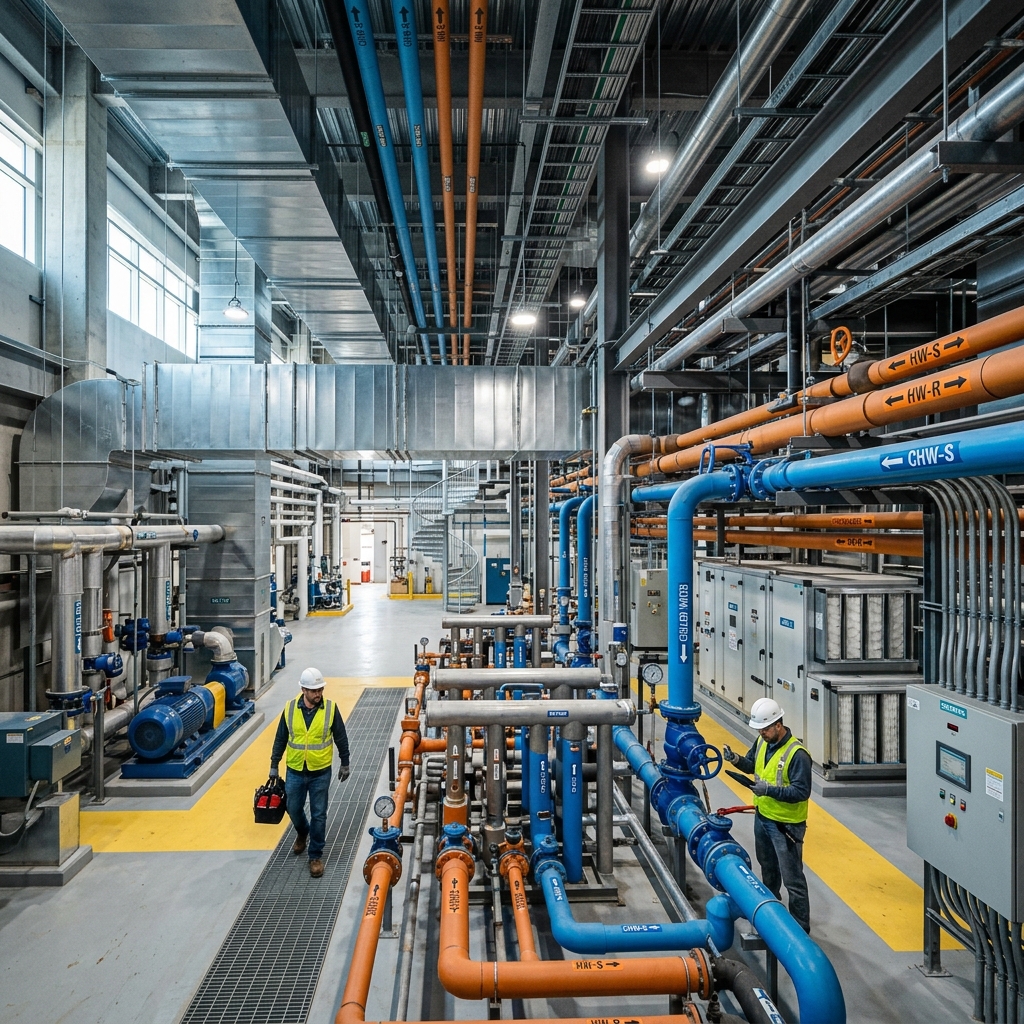
The Physics of Mechanical Protection
Insulation is not merely a wrap; it is a critical thermodynamic barrier. Observed data confirms that improper material selection leads to a 15-20% drop in system efficiency.
- Fiberglass Duct Wrap (FSK) Calculated with 25% overlap buffers to ensure vapor seal integrity across all external longitudinal seams.
- Elastomeric closed-cell Mandatory for chilled water and refrigerant lines to prevent interstitial condensation and mold growth.
- Acoustic Internal Lining Quantified by sound-absorption coefficients (NRC) to meet strict db-level requirements in healthcare and office zones.
- High-Temp Mineral Wool Dedicated takeoffs for steam and condensate lines, factoring in specialized stainless-steel banding and jacketing.
Case Study: Data Center Cooling Audit
In a Tier-4 Data Center project, we quantified 5,000 LF of fire-rated grease duct wrap and high-efficiency chilled-water insulation. By applying analytical waste factors, we identified a material discrepancy that saved the subcontractor $22k in procurement overruns.
Accurate Takeoffs for HVAC Insulation
Insulation is often the last thing installed on a mechanical project, but underestimating it can quickly wipe out your profit margin. If you don't order enough duct wrap or pipe lagging, your crews are left standing around waiting for materials. At HVAC Estimating Services, we provide highly accurate HVAC insulation estimating services so you know exactly what you need before the job starts.
We carefully review the project specifications to ensure you are bidding the correct R-values to meet modern **ASHRAE 90.1** energy codes. It's easy to make a math error when converting linear feet of ductwork into square feet of wrap, which often leads to a shortage of tape, mastic, and facing. We calculate the exact surface area required—including overlaps—and apply a realistic waste factor so you don't run short.
We use advanced takeoff software to calculate the perimeter of every piece of rectangular duct and the circumference of every pipe. You'll receive a detailed, easy-to-read report that breaks down exactly how much internal lining, exterior wrap, and closed-cell pipe insulation you need to order to finish the job right.
The Scientific Takeoff Lifecycle
Reviewing the Specs
We start by reading the mechanical specifications to understand exactly what type of insulation, facing, and R-value is required for each system.
Calculating Square Footage
We measure all the ductwork and piping and calculate the exact exterior surface area that needs to be wrapped or lined.
Counting Accessories
We manually count all the extra pieces you'll need, like PVC fitting covers, metal jackets, and pipe saddles.
Pricing the Labor
We apply industry-standard labor hours to the materials, adjusting for difficult working conditions like high ceilings or cramped mechanical rooms.
Trusted by Contractors Nationwide
See what industry professionals are saying about our HVAC estimating services
"HVAC Estimating Services has been a game-changer for our bidding process. Their accuracy on ductwork takeoffs has helped us win 40% more projects this year. The turnaround time is unbeatable - we get detailed estimates within 24 hours."
"We've been using their HVAC estimating services for over two years now. The level of detail in their cost breakdowns is exceptional. They've saved us countless hours and tens of thousands of dollars in material waste."
"As a small HVAC contractor, having reliable cost estimates is critical. Their team uses industry-standard tools like PlanSwift and RSMeans to deliver estimates I can trust. I recommend them to anyone in the mechanical contracting space."
"The commercial HVAC estimates we receive are incredibly thorough - piping, ductwork, equipment costs, labor - everything is accounted for. Their team truly understands construction estimating at a professional level."
Insulation Science & Compliance FAQs
We double-check your project's specifications against <strong>ASHRAE 90.1</strong> and local energy codes. We make sure the thickness of the wrap you are bidding (like 1.5" vs 2") actually provides the required R-value for the climate zone, so you don't fail your final inspection.
Yes. Different materials take different amounts of time to install. We separate standard fiberglass wrap from elastomeric products like Armaflex, because the gluing and sealing required for chilled water lines takes much longer and needs to be priced accordingly.
Yes. You can't just crush insulation at the hanger points—you need high-density shields or saddles to prevent condensation. We count these inserts individually and add a waste factor to the total square footage to account for the physical reality of wrapping pipes in the field.
Absolutely. Fire-rated wrap (like 3M Fire Barrier) is incredibly expensive, and underestimating it can ruin a job. We carefully calculate the surface area, including the mandatory overlaps required by fire code, so you have exactly enough material to pass inspection.
Yes. If a duct requires 1-inch acoustic lining on the inside, the sheet metal shop has to make the duct 2 inches larger in both directions to maintain the required airflow. We provide the metal sizes for the fab shop and the airflow sizes for the balancer.
Integrated Estimating Solutions
Ductwork Estimating
Technical measurement and quantification of sheet metal ductwork and SMACNA fabrication.
Learn MorePiping Estimation
Accurate takeoffs for all mechanical piping systems, including chilled water and steam lines.
Learn MoreCommercial HVAC
Large-scale mechanical takeoffs for offices, hospitals, and high-rise developments.
Learn More